



Deep Plane Facelift
Deep Plane Facelift in Boston, MA
A deep plane facelift is the most comprehensive surgical approach to facial rejuvenation. Unlike traditional techniques that tighten only the skin, the deep plane method repositions the underlying muscles, fat compartments, and connective tissue of the face – the actual structures that descend and create jowls, deep folds, and a hollow mid-face as we age. The result is a smoother, naturally refreshed appearance that looks like a younger version of yourself, not like you’ve had surgery.
At Wellesley Cosmetic Surgery, Dr. Arthur Shektman has performed over 800 facelift procedures across his career with a level of experience that is rare in the Boston area. His approach prioritizes anatomical precision, natural results, and patient safety at every stage.
If you’ve been researching facelift options and want to understand what separates a deep plane procedure from other techniques, and whether it’s the right choice for you, this page is written to give you everything you need to know.
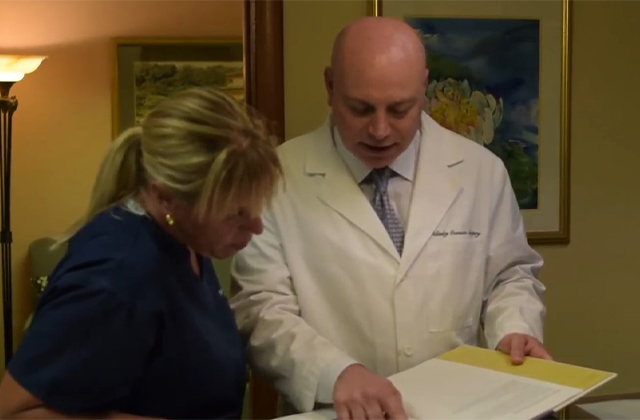
What Is a Deep Plane Facelift?
A deep plane facelift is an advanced surgical technique that operates beneath the SMAS (superficial musculoaponeurotic system), a layer of muscle and fibrous tissue that is the primary structural framework of the lower face. By working at this deeper anatomical level, Dr. Shektman is able to release the ligaments that tether descended facial tissue and reposition entire facial units, fat, muscle, and skin together, back to their natural, youthful location.
This is fundamentally different from approaches that pull on the skin alone. When skin is stretched without addressing the underlying structures, the tension creates distortion and the results fade faster as the skin relaxes. The deep plane approach avoids this by allowing the skin to redrape naturally over repositioned deeper tissue, with no artificial tension and no pulled appearance.
The SMAS: The Foundation of Facial Aging
To understand why the deep plane technique matters, it helps to understand what the SMAS is and what happens to it over time. The SMAS is a continuous sheet of muscle and fibrous tissue that runs from the neck up through the cheeks. The muscles you use for facial expression, including the platysma in the neck and the zygomaticus in the cheeks, are part of this system.
As we age, the SMAS and its supporting ligaments stretch and lose elasticity. The fat compartments of the face, which sit above and below the SMAS, descend with it. The result is:
- Jowls forming along and below the jawline
- Deepening of the nasolabial folds (the lines from the nose to the corners of the mouth)
- Flattening and descent of the cheeks
- Marionette lines extending from the corners of the mouth toward the chin
- Laxity and banding in the neck
The deep plane facelift addresses all of these changes at their anatomical source, not just their surface appearance.
How Dr. Shektman Performs the Deep Plane Facelift
Dr. Shektman begins with discreet incisions positioned at the hairline, around the ear, and (when needed) under the chin, which are placed to heal imperceptibly within the natural contours of the face. Through these incisions, he carefully elevates the skin and then enters the deep plane: the space below the SMAS and its retaining ligaments.
Working at this level, he releases the key ligaments that hold descended tissue in place, specifically the zygomatic and masseteric ligaments. This release allows the entire facial unit, including fat, muscle, and connective tissue, to be lifted and repositioned as a single composite layer rather than separating each component. The skin is then redraped over this repositioned foundation and the excess is removed, not under tension, but as a natural consequence of restoring the anatomy beneath.
Advanced suture techniques are used to secure the repositioned tissue in its elevated position, creating a stable, durable result. The procedure is performed under anesthesia in Dr. Shektman’s JCAHO-certified in-office operating suite in Wellesley, MA.
Deep Plane vs. SMAS vs. Traditional Facelift: What’s the Difference?
Not all facelift techniques are equal. The table below compares the three most common approaches so you can make an informed decision.
Deep Plane
- Anatomical depth: The deepest, below the SMAS
- Mid-face repositioning: Excellent
- Longevity: 10–15+ years
- Natural appearance: Highest
- Nasolabial fold correction: Best results
- Jowl correction: Excellent
- Procedure complexity: Advanced, requires deep expertise
- Recovery time: Typically, 2–3 weeks
SMAS Facelift
- Anatomical depth: SMAS layer
- Mid-face repositioning: Good
- Longevity: 8–12 years
- Natural appearance: High
- Nasolabial fold correction: Good results
- Jowl correction: Very good
- Procedure complexity: Intermediate
- Recovery time: Typically, 2–3 weeks
Traditional (Skin-Only)
- Anatomical depth: Skin only
- Mid-face repositioning: Limited
- Longevity: 3–5 years
- Natural appearance: Moderate, risk of “pulled” look
- Nasolabial fold correction: Minimal
- Jowl correction: Moderate
- Procedure complexity: Basic
- Recovery time: Typically, 1–2 weeks
Dr. Shektman will evaluate your anatomy, skin quality, and goals during your consultation to determine the optimal approach for your specific situation.
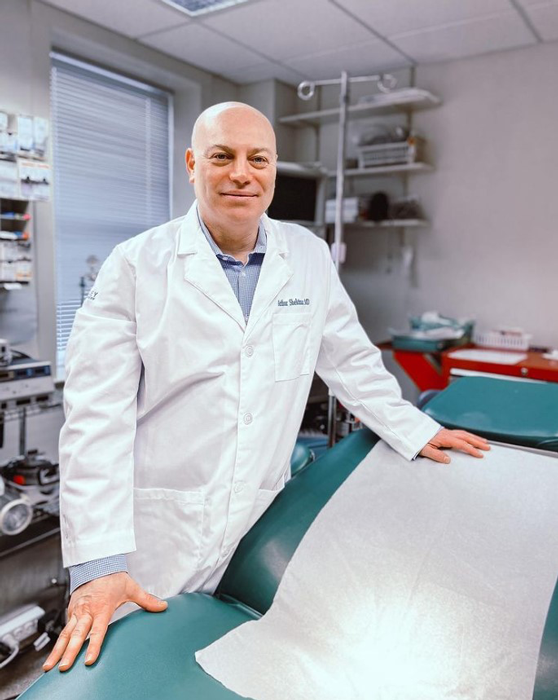
Care and Compassion
Dr. Arthur Shektman is a board-certified plastic surgeon, and is recognized as an expert in the field of cosmetic surgery. With over 20+ years of experience and nearly 3,500+ happy patients.
At Wellesley Cosmetic Surgery, our mission has always been to improve our patients’ lives through the use of cutting-edge, innovative plastic surgery techniques in a safe and secure environment.
What a Deep Plane Facelift Can Correct
A deep plane facelift is particularly effective for patients with moderate to advanced facial aging in the lower two-thirds of the face and neck. It is the procedure of choice when multiple aging concerns are present simultaneously and when patients want results that last.
Primary concerns addressed include:
- Jowls: Excess skin and descended tissue that blurs the jawline. The deep plane lift repositions the SMAS and underlying fat, restoring a clean, defined jaw contour.
- Nasolabial folds: The deep creases that run from the nose to the corners of the mouth. Because the deep plane approach releases the ligaments directly contributing to fold depth, it provides better improvement here than any other technique.
- Descended mid-face / flat cheeks: As facial fat compartments descend with the SMAS, cheeks flatten and lose projection. The deep plane lift repositions these compartments upward and forward, restoring youthful cheek volume without the need for implants or filler.
- Marionette lines: The vertical creases from the corners of the mouth toward the chin, which create a downturned, aged expression. Repositioning the SMAS reduces these lines significantly.
- Neck laxity: Banding of the platysma muscle and loose skin in the neck are commonly addressed simultaneously, often as part of a combined face and neck lift.
A facelift works on the lower two-thirds of the face and neck. It does not directly treat:
- The upper eyelids or brow (addressed by blepharoplasty or brow lift)
- Skin texture, fine surface lines, or pigmentation (addressed by laser resurfacing or Procell Micro-Channeling)
- Volume loss in the lips or perioral area (addressed by fat grafting or filler)
Dr. Shektman will discuss whether any complementary procedures would enhance your overall result during your consultation.

Are You a Good Candidate for a Deep Plane Facelift?
The ideal candidate for a deep plane facelift is someone who has meaningful facial aging in the lower face and neck, has realistic expectations, and is in good overall health. Specific criteria include:
You Are Likely a Strong Candidate If:
- You are between 40 and 70 years old, with visible jowling, nasolabial folds, or sagging mid-face tissue
- You have good skin elasticity – the skin can redrape well over repositioned tissue
- You are a non-smoker, or are committed to stopping well before surgery
- You are in good general health with no conditions that significantly impair healing
- You have had injectables previously but feel they are no longer providing adequate correction
- You want results that last, not a stopgap solution
- You are prepared to allow time for recovery and are not seeking a procedure with minimal downtime
Factors That May Affect Candidacy:
- Smoking: Significantly increases complication risk and impairs healing. Dr. Shektman requires smoking cessation for a minimum of four weeks before surgery and throughout recovery.
- Certain medical conditions: Uncontrolled diabetes, bleeding disorders, and conditions requiring blood thinners are evaluated individually. A thorough medical history review occurs at consultation.
- Significant skin laxity without adequate tissue volume: Some patients may benefit from fat grafting in combination with a facelift to restore volume.
- Younger patients with early laxity: Patients in their late 30s or early 40s with minimal descent may achieve comparable results with a SMAS facelift or non-surgical options.
Dr. Shektman uses Crisalix 3D imaging technology during your consultation to help you visualize realistic, anticipated outcomes before committing to any procedure.
What to Expect at Your Consultation with Dr. Shektman
Every patient who comes to Wellesley Cosmetic Surgery for a facelift consultation receives Dr. Shektman’s full, undivided attention. He does not delegate consultations. You will meet with the surgeon who will actually perform your procedure, someone who has completed more than 800 rhytidectomies and approaches every case as if it were his own family.
During your consultation, Dr. Shektman will:
- Review your complete medical history, including medications, supplements, prior surgeries, and current health status.
- Examine your facial anatomy in detail, assessing skin quality, tissue descent, ligament laxity, and underlying bone structure.
- Listen carefully to your specific concerns and what you hope to achieve.
- Explain the technique he recommends and why: deep plane, SMAS, or a combination approach, based on what he sees and what you’ve described.
- Use Crisalix 3D imaging to model anticipated outcomes and help you visualize realistic results.
- Discuss any complementary procedures (neck lift, fat grafting, eyelid surgery) that might optimize your overall outcome.
- Walk you through recovery expectations, timeline, and what to plan for.
- Answer every question you have with honesty, not sales pressure.
There is no obligation during your consultation, and no decision is required on the day. Most patients find that speaking with Dr. Shektman directly, rather than with a patient coordinator or aesthetician, gives them confidence they haven’t found elsewhere.
Deep Plane Facelift Recovery: A Week-by-Week Guide
The deep plane facelift has a slightly longer initial recovery than a skin-only facelift because more extensive tissue work is involved. However, because the skin is not placed under tension, healing tends to be smooth and the results age more gracefully. The following timeline and expectations reflect the typical recovery experience for Dr. Shektman’s patients.
Days 1–3
Peak swelling and bruising. Rest at home. Small surgical drains (if placed) are removed within the first 1–2 days. Head elevation is important.
Days 4–7
Swelling begins to soften. Most patients feel more comfortable. Sutures or staples are checked and partially removed. Tightness is normal.
Week 2
Bruising fades significantly. Many patients feel ready to be seen in public with light makeup by day 10–14. Remaining sutures removed.
Weeks 3–4
Residual swelling continues to resolve. Return to most normal activities. Avoid strenuous exercise and heavy lifting.
Weeks 5–6
Cleared for exercise and full activity for most patients. Incision lines begin to mature and fade.
Months 3–6
Final results taking shape. Residual firmness and numbness resolve. Incision lines continue fading — most are imperceptible at 6 months.
Year 1+
Full long-term results visible. With a healthy lifestyle and proper skincare, results can be maintained for 10 to 15+ years.
Recovery Tips Dr. Shektman Recommends
- Arrange for help: Plan for someone to be with you for at least the first 48 hours. Transportation to your first follow-up appointment will be needed.
- Prepare your home: Stock easy-to-prepare foods, have your medications filled in advance, and set up a comfortable resting area where you can keep your head elevated.
- Protect your skin: Rigorous sun protection is essential once healing allows. UV exposure accelerates skin aging and can affect scar maturation.
- No smoking: Smoking before or after surgery compromises blood supply to healing tissue and is the single most preventable cause of poor healing outcomes.
- Attend all follow-ups: Dr. Shektman schedules comprehensive post-operative appointments to monitor your healing at each stage. These appointments are not optional.
How Long Do Deep Plane Facelift Results Last?
A deep plane facelift performed by an experienced surgeon can produce results that last 10 to 15 years or longer. Because the technique addresses the actual structural causes of facial aging, repositioning descended tissue at the SMAS level rather than stretching skin, the results age more gracefully and do not suddenly “expire” the way skin-only results do.
The longevity of your results will depend on several factors:
- Sun protection: UV radiation is the number-one external accelerant of facial aging. Consistent, daily use of broad-spectrum SPF 30 or higher is the most impactful single habit for maintaining your result.
- Smoking: Smoking accelerates skin laxity and connective tissue degradation. Patients who quit permanently following surgery maintain their results significantly longer than those who resume.
- Skin care: A consistent regimen that includes retinoids, antioxidants, and hydration supports skin quality over time and complements your surgical result.
- Genetics: Skin elasticity, bone structure, and the pace of individual aging all affect long-term outcomes. Dr. Shektman can give you an honest assessment of what to expect given your specific anatomy.
Many of Dr. Shektman’s patients come back years after their procedure still looking substantially younger than their age, which is a testament to both the technique and their own commitment to maintaining results.
Why Boston-Area Patients Trust Dr. Arthur Shektman for Facelift Surgery
Choosing a facelift surgeon is one of the most consequential aesthetic decisions you can make. The difference between a result that looks natural and one that doesn’t comes down almost entirely to surgical judgment and technical experience, not the facility, not the brand, not the marketing.
800+ Facelift Procedures – A Rare Level of Experience
Dr. Shektman has performed over 800 rhytidectomies across more than 20 years in practice. Volume matters in facelift surgery. A surgeon who performs this procedure regularly develops a depth of anatomical knowledge and intraoperative judgment that simply cannot be replicated by less experienced providers. He understands the subtle variations in facial anatomy from patient to patient and adapts his technique accordingly, not by algorithm, but by experience.
Board-Certified. Member of ASPS.
Dr. Shektman is board-certified by the American Board of Plastic Surgery and is a member of the American Society of Plastic Surgeons (ASPS), the leading authority on cosmetic and reconstructive plastic surgery. These credentials represent a commitment to surgical standards, continued education, and ethical practice that not every provider in the aesthetic space maintains.
A JCAHO-Certified In-Office Surgical Suite
Wellesley Cosmetic Surgery operates a JCAHO-certified in-office operating suite, the same safety and quality accreditation standard applied to hospitals and ambulatory surgical centers. This means your procedure takes place in a monitored, fully equipped surgical environment staffed by trained personnel, not in a procedure room designed for injectables.
Crisalix 3D Imaging – See Your Results Before You Decide
Dr. Shektman uses Crisalix 3D imaging technology to model anticipated facelift outcomes for each patient. This is not a guarantee as anatomy is complex and results vary, but it is a valuable tool for aligning expectations and helping patients feel genuinely confident in their decision before surgery.
Personal Care from the Surgeon Himself
At Wellesley Cosmetic Surgery, you are never handed off to a patient coordinator or aesthetician for your consultation. You meet with Dr. Shektman directly. He performs your surgery. He sees you at your follow-up appointments. In a world where many practices scale by delegating patient contact, this level of personal engagement is increasingly rare, and patients consistently cite it as the most important factor in their experience.
Procedures Commonly Combined with a Deep Plane Facelift
A facelift addresses the lower two-thirds of the face and neck. Many patients choose to address adjacent areas at the same time to achieve a harmonious, comprehensive rejuvenation. Combining procedures can be surgically efficient and reduce overall recovery time compared to staging them separately.
The neck is almost always addressed in combination with a facelift, since the aging of the lower face and neck are closely related. In a neck lift, Dr. Shektman addresses platysmal banding, submental fat, and neck skin laxity simultaneously to create a smooth, defined jawline-to-neck transition.
A descended brow creates a heavy, tired appearance that a facelift does not address. Patients who have brow ptosis or forehead laxity may choose to add an endoscopic or temporal brow lift to achieve balance between the upper and lower face.
Upper and/or lower eyelid surgery removes excess skin and fat to open the eye and reduces the tired or puffy appearance that often accompanies facial aging. Many facelift patients find that eyelid surgery is the complementary procedure that most dramatically enhances the overall result.
Aging involves both tissue descent and volume loss. In patients where facial hollowing (particularly in the cheeks, temples, or around the mouth) is significant, fat grafting, using the patient’s own fat harvested from elsewhere, can restore volume in a natural, long-lasting way that filler cannot replicate.
Surface skin quality, including texture, fine lines, and pigmentation, is not improved by facelift surgery. Patients who want comprehensive facial rejuvenation often add a laser skin resurfacing or Procell Micro-Channeling treatment either at the time of surgery or in the months following recovery to optimize overall results.
Deep Plane Facelift Near Boston, MA
Wellesley Cosmetic Surgery is located at 170 Worcester Street in Wellesley, MA – just 12 miles west of downtown Boston and easily accessible from across the region. Patients travel to see Dr. Shektman from:
- Boston, Back Bay, Beacon Hill, and South End
- Newton, Brookline, Chestnut Hill, and West Roxbury
- Cambridge, Waltham, Lexington, and Arlington
- Wellesley, Needham, Dover, and Medfield
- Natick, Framingham, Hopkinton, and the MetroWest corridor
- Dedham, Norwood, Sharon, and the South Shore
Our practice offers private, in-person consultations. Patients who wish to begin the process before their first appointment may submit photos in advance through the Crisalix 3D imaging portal.

Refining Your
Natural Beauty
Dr. Arthur Shektman is a member of the American Society of Plastic Surgeons, the leading authority on cosmetic plastic surgery. Dr. Shektman will work with you so you can be proud and confident in the person you see in the mirror.
Take the First Step: Schedule Your Consultation
If you’re ready to have an honest conversation about what a deep plane facelift can do for you, Dr. Shektman and the team at Wellesley Cosmetic Surgery are here.
There is no pressure, no obligation, and no sales pitch. Just a board-certified plastic surgeon with over 800 facelifts behind him, ready to give you his honest assessment and a personalized plan.
Call our offices at (781) 239-0680 or complete our online contact form to schedule your consultation today.
Deep Plane Facelift – FAQs
A traditional facelift tightens the skin alone, which can produce results that look pulled and fade relatively quickly as the skin relaxes. A deep plane facelift works beneath the SMAS layer, the muscular and connective tissue framework of the face, repositioning the underlying structures that have descended with age. The skin redrapes naturally over this repositioned foundation without artificial tension. Results look more natural, last longer, and age more gracefully.
Both techniques work below the skin and address the SMAS layer. A SMAS facelift plicates (folds and sutures) or implicates (removes a section of) the SMAS to tighten it but does not release the deeper retaining ligaments. A deep plane facelift goes further, releasing the zygomatic and masseteric ligaments that anchor descended tissue, allowing more complete repositioning of the mid-face and better correction of deep nasolabial folds. For patients with significant mid-face descent, the deep plane technique offers superior results.
Yes, for the right candidate who is someone with meaningful facial aging who wants the most natural, durable result available from a single procedure. The deep plane technique delivers improvements that lesser approaches simply cannot achieve, particularly in the mid-face and nasolabial fold area. Patient satisfaction with facelift surgery is consistently among the highest of any cosmetic procedure, and the longevity of deep plane results makes it one of the most cost-effective investments in facial aesthetics over a 10- to 15-year horizon.
With a healthy lifestyle – no smoking, consistent sun protection, a good skincare regimen – results from a deep plane facelift typically last 10 to 15 years or longer. The technique’s durability comes from repositioning the structural foundation of the face, not from stretching skin. Results do not disappear suddenly; they age gradually, and most patients look substantially younger than their chronological age for well over a decade.
Most deep plane facelift patients are between 45 and 65, though the procedure is appropriate across a wide age range depending on the degree of facial aging. The ideal time is when you have meaningful laxity to correct, enough for surgery to deliver a significant improvement, but still have good skin elasticity that allows the skin to redrape well. Younger patients (late 30s to early 40s) with early descent may achieve excellent results with a SMAS facelift. Patients in their 70s with advanced laxity can still be strong candidates; Dr. Shektman evaluates each individual on their own anatomy.
Natural results are the explicit goal of Dr. Shektman’s technique. The deep plane approach allows the skin to fall naturally over repositioned tissue without the tension that creates a stretched or windswept appearance. Patients consistently describe their results as looking like a rested, younger version of themselves, rather than like they’ve had surgery. The more than 800 facelifts Dr. Shektman has performed represent real experience in achieving this outcome consistently.
A facelift addresses the lower two-thirds of the face and neck. It does not improve the upper eyelids, brow, or forehead (which require blepharoplasty or brow lift), skin texture or surface lines (which respond to laser resurfacing), or volume deficits in the lips or perioral area (which are addressed with fat grafting or filler). Many patients combine a facelift with one or more of these complementary treatments for a more complete rejuvenation.
A mini facelift is a shorter, more limited procedure that addresses early jowling and neck laxity through smaller incisions with less tissue elevation. It is a reasonable option for patients with mild, early aging who want a shorter recovery, but it does not address the mid-face, does not work at the SMAS or deep plane level, and produces less comprehensive and less durable results. For patients with moderate to significant facial aging, a mini facelift will not achieve the same improvement as a deep plane procedure. Dr. Shektman will recommend the appropriate approach during your consultation.
The procedure is performed under anesthesia, and patients feel nothing during surgery. Post-operatively, discomfort is typically described as moderate tightness and soreness rather than sharp pain and is well-managed with prescription medication for the first several days. Most patients are surprised by how manageable the recovery is. By the end of the first week, most find they no longer need prescription pain medication.
All surgery carries risk, and a deep plane facelift is no exception. The most commonly discussed risks include hematoma (blood pooling beneath the skin, the most frequent early complication), temporary nerve sensitivity, infection, scarring, and asymmetry. Because the deep plane technique works in proximity to the facial nerve branches, it requires a surgeon with specific expertise in deep plane anatomy – the reason surgeon selection matters enormously. In the hands of an experienced, board-certified plastic surgeon like Dr. Shektman, complication rates are low and serious complications are rare.
Hematoma, a collection of blood beneath the skin, is the most common early complication following facelift surgery. It typically presents within the first 24 hours as sudden swelling on one side of the face. Risk factors include uncontrolled blood pressure, use of aspirin or blood thinners, and post-operative straining. Dr. Shektman takes precautions including careful intraoperative hemostasis, placement of small drains when indicated, and detailed pre-operative instructions about medications to avoid. Blood pressure management in the immediate post-operative period is also a key part of the protocol.
Incisions are placed at the hairline, in the natural contours around the ear, and (if necessary) under the chin – locations specifically chosen to be imperceptible once healed. In the early weeks, incision lines may be visible as pink marks. By six months, most are barely noticeable; by one year, they are typically invisible in normal social settings. Proper wound care and sun protection during the healing period support optimal scar maturation.
Yes, and for many patients, a thoughtful combination approach produces the most complete result. Botox relaxes dynamic lines (forehead, crow’s feet, brow) that surgery does not address. Filler can restore volume in areas outside the facelift zone, such as the lips and perioral area. However, large volumes of filler in the areas being surgically treated are generally discontinued before surgery. Dr. Shektman will advise you on timing and what to pause before your procedure during the consultation.
Initial improvement is visible almost immediately, even through the initial swelling and bruising. As swelling resolves over the first two to three weeks, the results become more apparent. Most patients feel their results are visible and presentable within two to three weeks, enough to return to work and social activities. The final result, with all swelling resolved and incisions fully matured, is typically fully visible at six months.
Facelift surgery is priced individually based on procedural complexity, anesthesia, and whether additional procedures are performed concurrently. A straightforward estimate cannot be given without a consultation. After Dr. Shektman evaluates your anatomy and discusses your goals, a detailed, transparent cost quote is provided. Financing options are available. Patients who compare the cost of repeat filler treatments over a decade often find that facelift surgery is the more economical long-term investment.
Yes, and for a meaningful period, not just a few days. Smoking impairs microvascular circulation, which is essential for wound healing. Patients who smoke face significantly higher risks of skin necrosis, poor wound healing, visible scarring, and prolonged recovery. Dr. Shektman requires smoking cessation for a minimum of four weeks before surgery and throughout the recovery period. Patients who quit permanently prior to surgery maintain their results substantially longer.
Absolutely. Male facelift surgery follows the same anatomical principles, with specific consideration given to the hairline, beard pattern, and the aesthetic goals appropriate for masculine facial structure. The incision placement is adapted accordingly to avoid distorting the hairline or sideburns. Dr. Shektman has experience with male facelift patients and approaches each case with attention to the nuances of male facial anatomy.
The most important questions to ask any facelift surgeon include:
- How many facelifts have you performed?
- Are you board-certified by the American Board of Plastic Surgery?
- What technique do you recommend for my anatomy and why?
- What does your recovery timeline look like?
- Can I see before and after photos of patients with similar anatomy to mine?
- What are your complication rates?
- Will you be performing my surgery personally?
Dr. Shektman welcomes all these questions and more. He encourages patients to use the consultation to evaluate him as much as to learn about the procedure.